

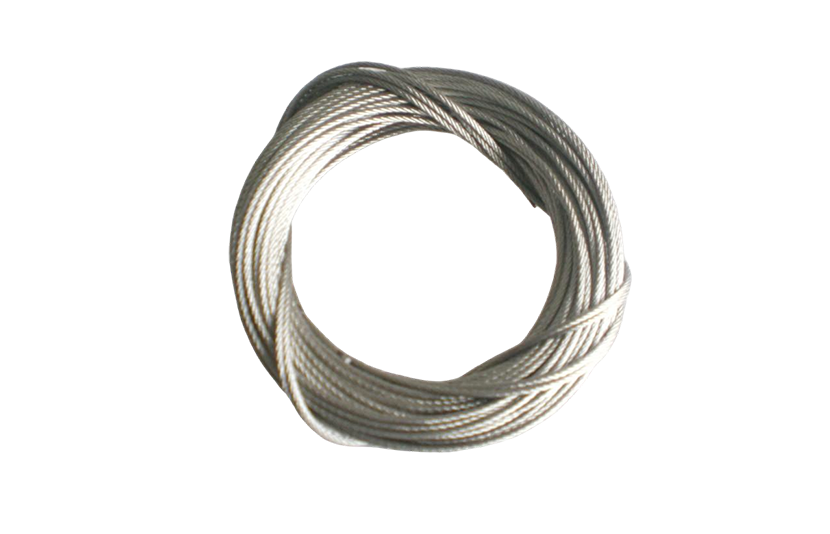
Selecting the right steel wire rope for crane applications is one of the most important decisions in lifting, hoisting, and material handling operations. A properly chosen wire rope improves safety, extends service life, supports smoother crane performance, and helps reduce downtime. A poor match, on the other hand, can lead to premature wear, reduced lifting efficiency, higher maintenance costs, and serious operational risks.
This guide provides a clear, SEO-friendly overview of how to select steel wire rope for cranes, including essential definitions, construction types, rope classifications, selection factors, performance advantages, and practical specification tables. The information is written for general industry use and can be used in blog posts, category pages, service pages, and technical content hubs.
Steel wire rope is a load-bearing mechanical component made from multiple steel wires twisted together into strands, which are then laid around a core. In crane applications, wire rope is used for lifting, hoisting, trolley movement, luffing, and other motion-control functions where strength, flexibility, and fatigue resistance are required.
Compared with ordinary cable or chain, steel wire rope offers a unique combination of tensile strength, bending performance, abrasion resistance, and reliability under dynamic loads. That is why crane wire rope selection must be based on both the crane operating conditions and the rope’s structural characteristics.
Choosing the correct crane steel wire rope is not simply about matching diameter or breaking strength. It is about ensuring the rope is compatible with the drum design, sheave diameter, reeving configuration, load cycle, environment, and maintenance schedule.
Correct selection helps achieve:
To select the right rope, you should evaluate the crane’s mechanical design and the working environment. The most important selection factors are listed below.
The first step in selecting wire rope for crane lifting is understanding the maximum working load and the expected dynamic load conditions. The rope must safely handle not only the static load but also acceleration, deceleration, shock loading, and repeated lifting cycles.
Engineers typically consider the required design factor or safety factor, along with the crane’s rated load. A rope with sufficient breaking strength must be chosen to support the operating load with a suitable margin of safety.
Rope diameter is one of the most visible and important specifications in steel wire rope selection. The diameter affects strength, flexibility, spool compatibility, and wear resistance. A rope that is too thick may not fit correctly in the sheaves or drum grooves, while a rope that is too thin may fail to provide the required capacity.
Crane manufacturers often specify an exact or recommended diameter range. Always confirm the rope diameter against the crane’s drum and sheave design before installation.
Wire rope construction defines how the wires, strands, and core are arranged. This has a major impact on flexibility, fatigue resistance, abrasion resistance, and rotation behavior. Common crane rope constructions include 6x19, 6x36, 19x7, and compacted or rotation-resistant designs.
The right construction depends on the task:
The core supports the strands and helps preserve rope shape under load. Common core types include fiber core, independent wire rope core, and synthetic core options.
For many crane applications, IWRC steel wire rope is a preferred choice because it supports heavy-duty lifting and resists deformation under pressure.
Strand pattern and lay direction influence handling and operating behavior. Common lay types include regular lay and lang lay.
The lay direction must match the crane drum and reeving system requirements. Improper lay selection may cause poor spooling, torque issues, or accelerated wear.
Different cranes create different rope demands. Overhead cranes, tower cranes, mobile cranes, gantry cranes, and hoists all operate under different duty cycles, bending conditions, and environmental exposures.
Frequent lifting, high-speed operation, and repeated bending require a rope with strong fatigue resistance. Heavy-duty or continuous service usually calls for more advanced crane hoist rope designs and higher-grade materials.
The ratio between rope diameter and sheave/drum diameter is critical. A rope that bends too tightly will experience increased internal stress and reduced service life. This is why the D/d ratio, or diameter ratio, must be reviewed during selection.
In general, a larger sheave diameter improves rope life because it reduces bending stress. However, the exact ratio should always follow crane design standards and the rope manufacturer’s technical guidance.
Environmental conditions can significantly affect wire rope performance. Consider:
If the crane operates in wet or corrosive environments, corrosion-resistant lubrication practices and proper inspection intervals become even more important. In severe cases, a rope with enhanced surface protection may be preferred.
Steel wire rope selection should always align with applicable standards, crane specifications, and local safety regulations. Industry standards help define minimum expectations for construction, testing, inspection, and replacement criteria.
While exact requirements vary by region and application, the rope should always meet the technical needs of the crane and the governing safety framework.
The following table summarizes widely used rope constructions for crane applications. This can help users compare typical performance characteristics when selecting a suitable product.
| Rope Construction | Typical Characteristics | Common Use | Main Advantage |
|---|---|---|---|
| 6x19 | Moderate flexibility, good abrasion resistance | General crane lifting, hoisting, and rugged service | Balanced durability and strength |
| 6x36 | Higher flexibility, better bending fatigue performance | Frequent spooling, dynamic lifting, multi-layer drums | Improved flexibility |
| 8x19 | More wires per strand, improved flexibility | Precision lifting and crane hoist systems | Smoother bending behavior |
| Rotation-resistant | Designed to reduce load spin and rotation | Single-fall hoists, tall lifts, controlled lifting | Minimized twisting under load |
| Compacted rope | Higher metal density, smoother surface, improved strength | High-performance cranes and demanding lifting systems | Higher breaking strength and wear resistance |
Understanding basic wire rope terminology makes it easier to compare options and read product specifications accurately.
| Term | Definition |
|---|---|
| Nominal diameter | The stated outside diameter of the wire rope |
| Breaking strength | The maximum load the rope can withstand before failure |
| Working load limit | The maximum load recommended for safe operation |
| Bending fatigue | Wear caused by repeated bending over sheaves and drums |
| Crush resistance | The rope’s ability to resist deformation under pressure |
| Rotation resistance | The rope’s ability to reduce twisting or spinning under load |
| Lubrication retention | The rope’s capacity to hold internal lubricant for longer service life |
Different crane types need different rope properties. The following table provides a practical overview of how to match the rope to the application.
| Crane Application | Key Selection Priority | Recommended Rope Behavior |
|---|---|---|
| Overhead crane | Fatigue resistance and smooth spooling | Flexible rope with balanced durability |
| Mobile crane | Strength, handling, and variable load conditions | High-strength rope with stable construction |
| Tower crane | Rotation control and long vertical lifting performance | Rotation-resistant rope or high-performance hoist rope |
| Gantry crane | Load stability and long service life | Wear-resistant rope with good drum performance |
| Hoist system | Flexibility, spooling quality, and bending fatigue | Flexible rope with suitable core and lay |
| Marine or port crane | Corrosion resistance and rugged duty cycle | Protected rope with high abrasion resistance |
Steel wire rope remains one of the most trusted lifting media in the crane industry because it combines several performance advantages in a single product.
A wire rope specification usually includes several details that describe its structure and performance. Knowing how to interpret them helps avoid selection mistakes.
| Specification Element | What It Means | Why It Matters |
|---|---|---|
| Diameter | Rope size in millimeters or inches | Must fit the crane drum and sheaves |
| Construction | Strand and wire arrangement | Determines flexibility and wear behavior |
| Core type | Fiber core, IWRC, or synthetic core | Affects strength, support, and crush resistance |
| Lay type | Regular lay or lang lay | Influences handling and performance |
| Grade | Wire strength grade | Impacts breaking strength |
| Lubrication | Factory-applied or special lubrication | Supports wear protection and corrosion resistance |
| Rotation behavior | Standard or rotation-resistant | Important for lifting control |
To maximize rope life and crane safety, follow these practical selection tips:
Many premature rope failures are caused by selection mistakes rather than normal wear. Avoid the following common errors:
The table below offers a general comparison of common rope performance priorities used in crane environments.
| Performance Priority | Best-Fit Rope Feature | Typical Benefit |
|---|---|---|
| High abrasion resistance | Fewer, larger outer wires | Improved surface durability |
| High flexibility | More wires per strand | Better bending over sheaves |
| Crush resistance | IWRC or compacted design | Reduced deformation on drums |
| Rotation control | Rotation-resistant construction | Less twist during lifting |
| Long service life | Correct construction and lubrication | Lower wear and extended use |
Even the best steel wire rope for crane applications will eventually wear out. Regular inspection is essential for safe operation. Visual inspection should focus on broken wires, diameter reduction, corrosion, deformation, birdcaging, crushing, heat damage, and unusual wear patterns.
Replacement should be based on the crane manufacturer’s criteria, site operating conditions, and applicable safety standards. A rope should be replaced before its condition becomes a safety hazard.
For content optimization, related search phrases may include:
crane wire rope, steel wire rope for lifting, wire rope for crane hoist, crane hoisting rope, rotation-resistant wire rope, IWRC wire rope, wire rope construction, wire rope diameter selection, crane lifting rope, and steel cable for crane use.
Using these terms naturally throughout headings, paragraphs, and tables can improve relevance for search engines while keeping the content readable for industry buyers, engineers, and maintenance teams.
The best rope depends on the crane type, load conditions, drum design, bending frequency, and environment. There is no single best rope for every crane application.
IWRC is often better for heavy-duty crane use because it offers improved crush resistance, support, and strength. Fiber core may still be suitable in lighter or more flexible applications.
Common crane constructions include 6x19, 6x36, and rotation-resistant designs. The correct choice depends on whether abrasion resistance, flexibility, or rotation control is the top priority.
Check the rope diameter, construction, lay direction, and core type against the crane manufacturer’s specifications and verify drum and sheave compatibility.
Selecting the right steel wire rope for crane applications requires careful attention to strength, flexibility, fatigue resistance, core type, rope construction, drum compatibility, and environmental conditions. By evaluating each factor systematically, operators and engineers can improve crane safety, maximize rope life, and reduce long-term maintenance costs.
For any crane wire rope selection project, the most reliable approach is to combine technical specifications with real-world operating conditions. A well-matched rope supports safer lifting, smoother operation, and better overall performance across a wide range of industrial crane applications.
```

 Landline Phone: +86-513-85100011
Telephone: +86 13585223056
 E-mail: hangtong@nthangtong.com
vicky@nthangtong.com
 Address: No. 508, Guangxing Road, Baishan Town, Bo'ai County, Jiaozuo City, Henan Province
Copyright © Henan Suxiang Steel Cable Co., Ltd
This website uses cookies to ensure you get the best experience on our website.
 Español
 한국어
한국어 العربية
 Tiếng Việt
 Filipino



 Phone
Phone
Comment
(0)